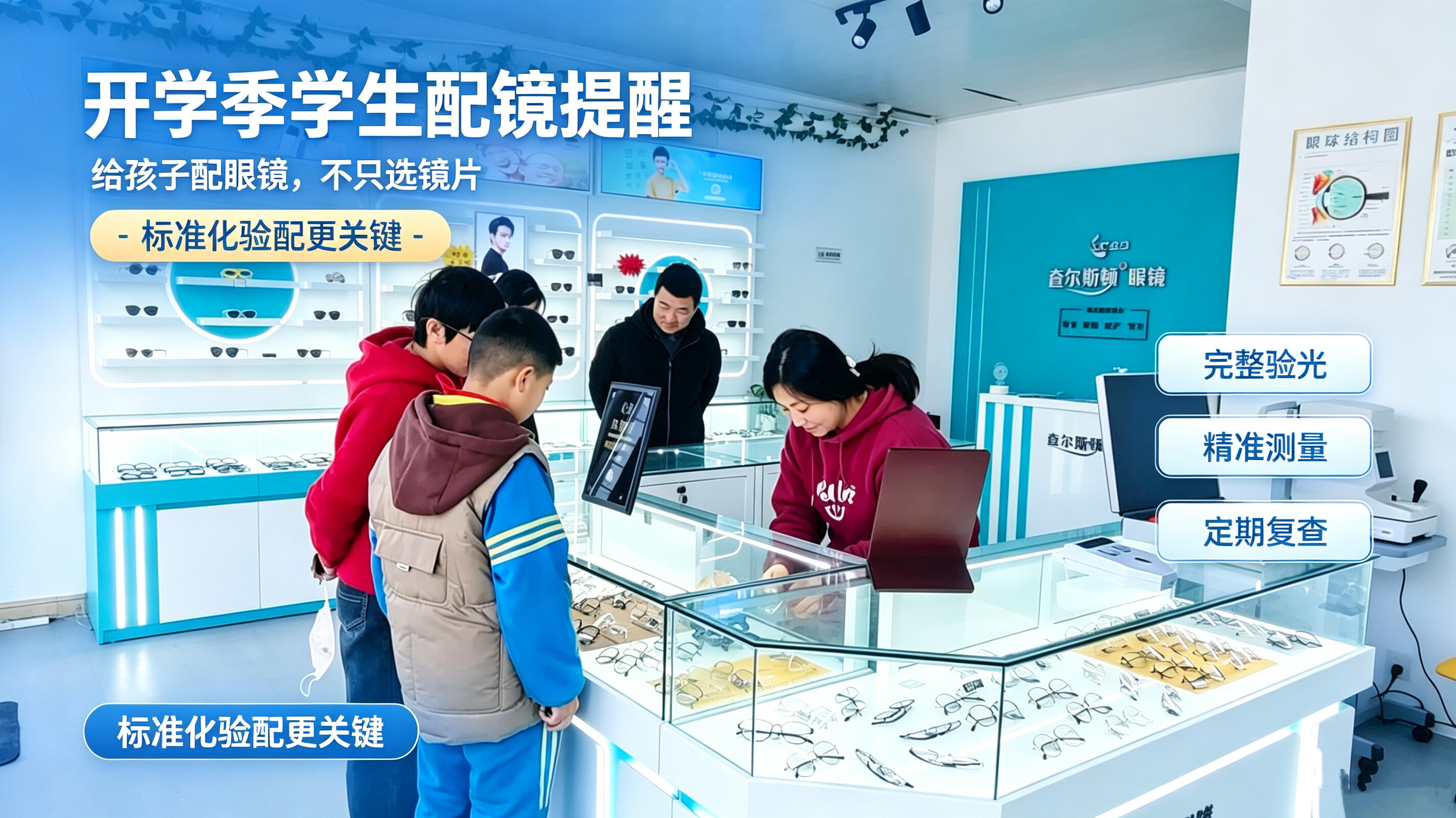
As the new school term begins and academic pressure mounts, many parents take this opportunity to schedule vision exams and update glasses for their children. With a wide range of myopia management lenses available for youth, families often focus on brand names and prices while overlooking the standardized process of eye examination, trial fitting, and follow-up care—a critical factor that directly impacts the child's visual experience.
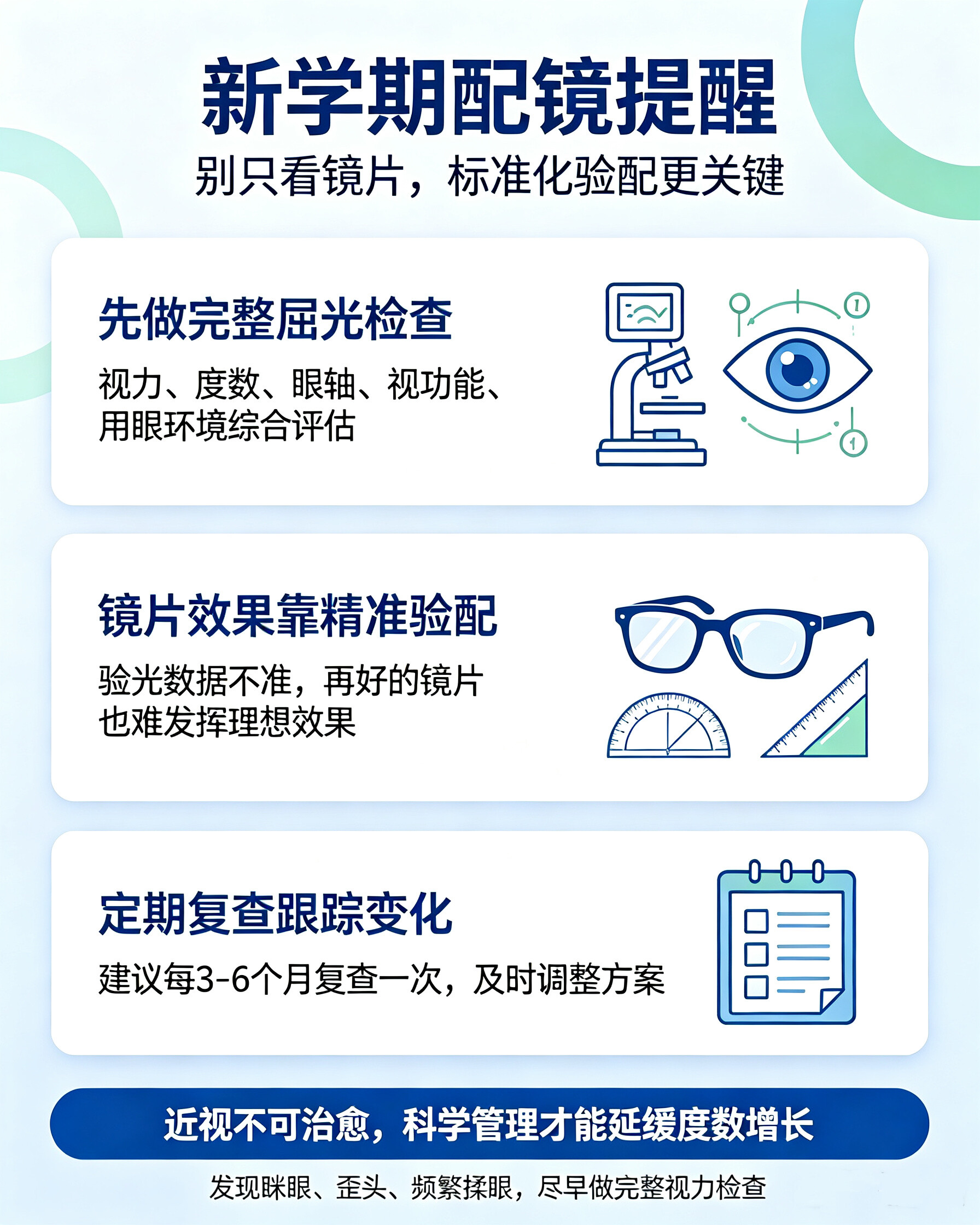
According to the National Health Commission's science communication on myopia prevention for children and adolescents, their eyeballs are still developing, so the optometry logic differs completely from that of adults. Fitting glasses for children cannot be done by simply measuring refractive error; it requires a comprehensive refraction assessment that integrates axial length, visual function, and visual environment data to determine an appropriate prescription. Improper fitting or mismatched parameters can easily lead to increased visual fatigue.
Many parents have two common misconceptions:
First, don't focus solely on lens price and overlook the store's fitting expertise. The effectiveness of myopia control lenses relies on precise refraction. Even with high-quality lenses, inaccurate measurements will prevent optimal results.
Second, skip follow-up visits after getting glasses. Since children and adolescents are still growing, their vision can change dynamically. For kids wearing myopia management lenses,Get a vision check every 3–6 monthsTrack axial length changes in real time and adjust the plan based on actual conditions.
At the family level, parents should manage basic eye care by limiting continuous near-work sessions, ensuring daily outdoor time in natural light, maintaining proper posture while reading and writing, reducing prolonged screen use, and employing multiple strategies to protect children's eye health.
Reminder to Parents: Myopia in adolescents is a developmental condition that cannot be cured. What we can do is manage myopia scientifically to slow down rapid progression. If you notice your child squinting, tilting their head to see the board, or frequently rubbing their eyes, please bring them promptly for a comprehensive vision examination at a reputable optometry clinic.