
Launch a professional eyewear store or optometry center, even with no prior experience.
Zero experience? No problem. We provide full support to get you started.
Industry Outlook Analysis
The eyewear market offers vast opportunities and strong potential for entrepreneurs.
Driven by rising consumer spending, growing public awareness of eye health, and increasing demand from youth myopia management and age-related presbyopia needs, the professional eyewear retail and optometry services sector is entering a period of steady growth.
Market Size & CAGR
The China eyewear retail market size was approximately 933 billion yuan in 2024, projected to reach 1332 billion yuan by 2029, with a CAGR of about 7.4% from 2024 to 2029.
(Source: iResearch "2025 China Eyewear Industry White Paper")
Potential customers
Over 7 billion people in China are nearsighted, and the large aging population with presbyopia needs further expands the massive consumer base for vision correction.
(Data source: Ministry of Education Student Physical Health Survey; Ophthalmology Branch of the Chinese Medical Association public data)
Gross profit margin in the eyewear retail industry
The overall gross margin for optical retail stores in the offline sector typically ranges from 53% to 71%. The industry is characterized by high gross margins but low net profits. Actual profitability per store is influenced by multiple factors including rent, labor costs, location, and management practices; this does not guarantee that individual stores will achieve these returns.
(Data source: Public financial reports of listed eyewear chain enterprises)
Four Core Trends in the Eyewear and Optometry Industry
Seize the moment and build your career
For more questions, please visitFrequently Asked Questions for Franchising
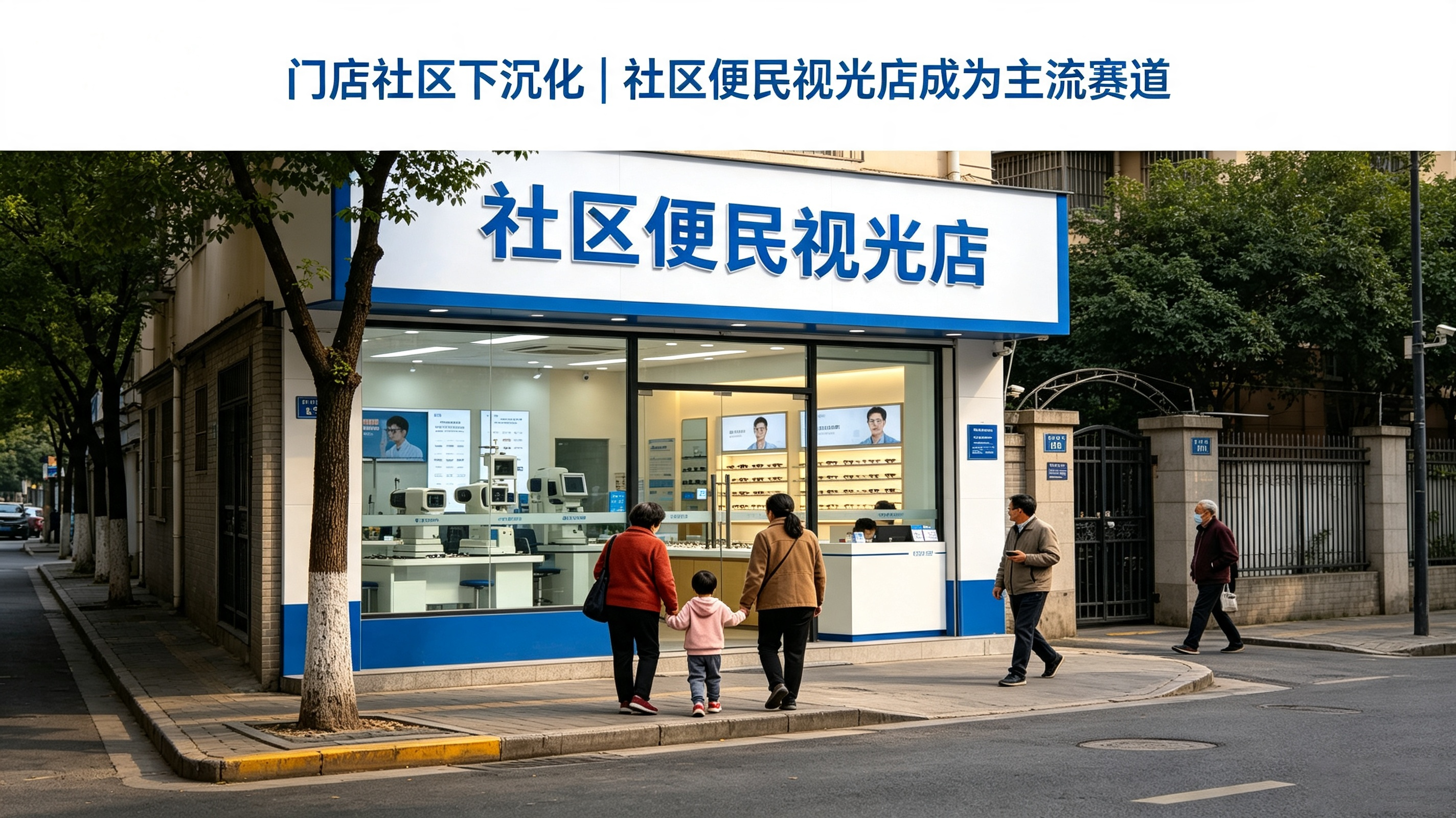
Store Localization in Communities|Convenience Optical Shops Become the Mainstream Sector
High rent and customer acquisition costs plague large malls, making small, boutique community vision clinics the top choice for new openings. Leveraging steady local demand, these clinics enjoy lower rent, rapid word-of-mouth growth within neighborhoods, and reduced acquisition costs. With massive gaps in county-level and community networks—and policy support for grassroots vision care—there is significant potential in this market. Key takeaways: essential community services, low investment, fast ROI potential, and flexible site selection.
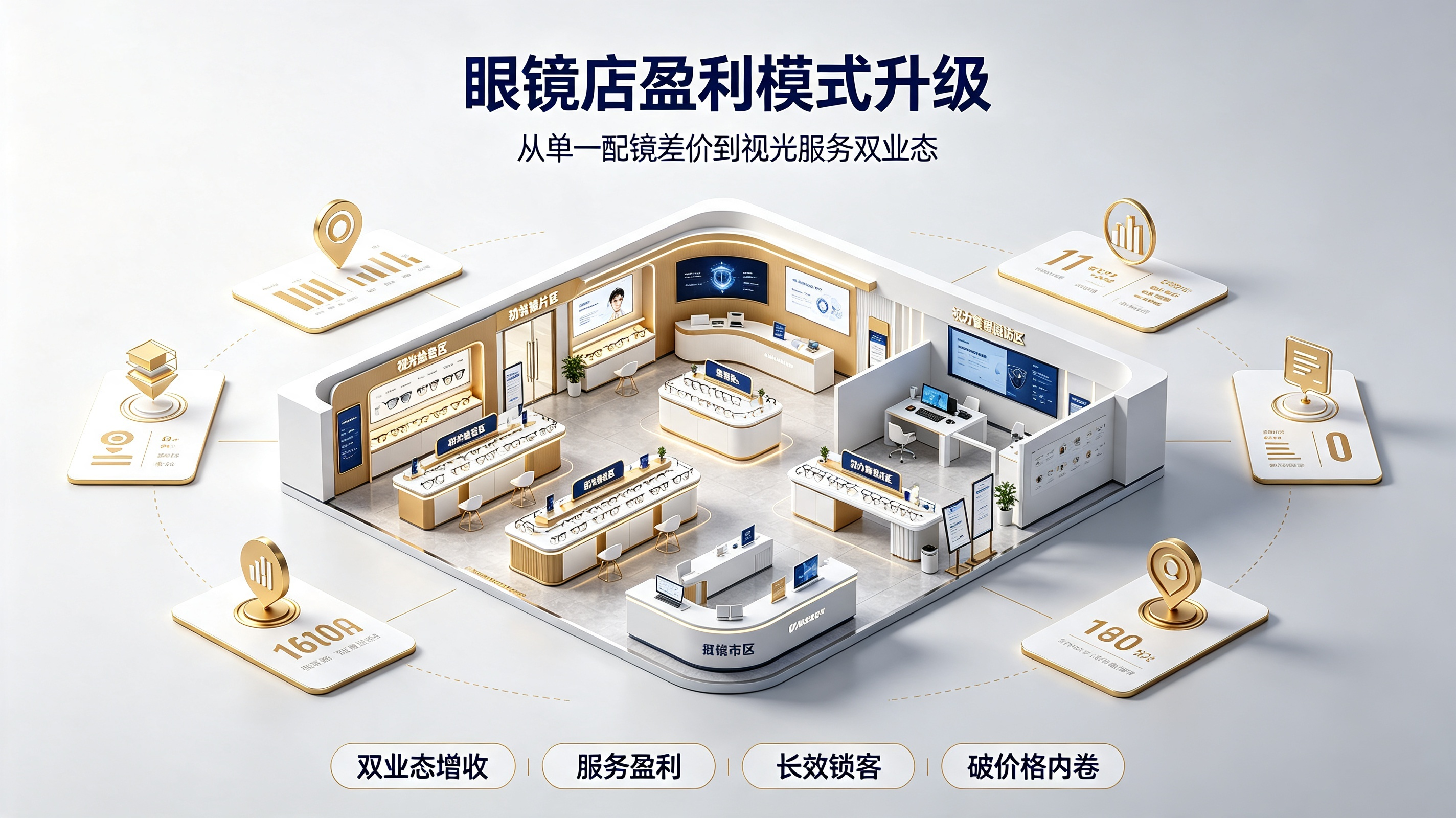
Business Model Evolution: From Selling Eyewear to Providing Comprehensive Eye Health Services Across the Entire Customer Journey
Traditional eyewear stores rely on markups for profit amid intensifying industry homogeneity. The sector is shifting to a dual-model approach combining prescription services with vision management and periodic follow-ups. Functional lenses, visual function assessment, and vision record-keeping are now core profit drivers. Average order value and repeat purchase rates have surged; single-product price wars are no longer effective. Professional services build a unique competitive barrier for each store. Core takeaways: revenue growth through dual models, profitability via service, long-term customer retention, and reduced price competition.
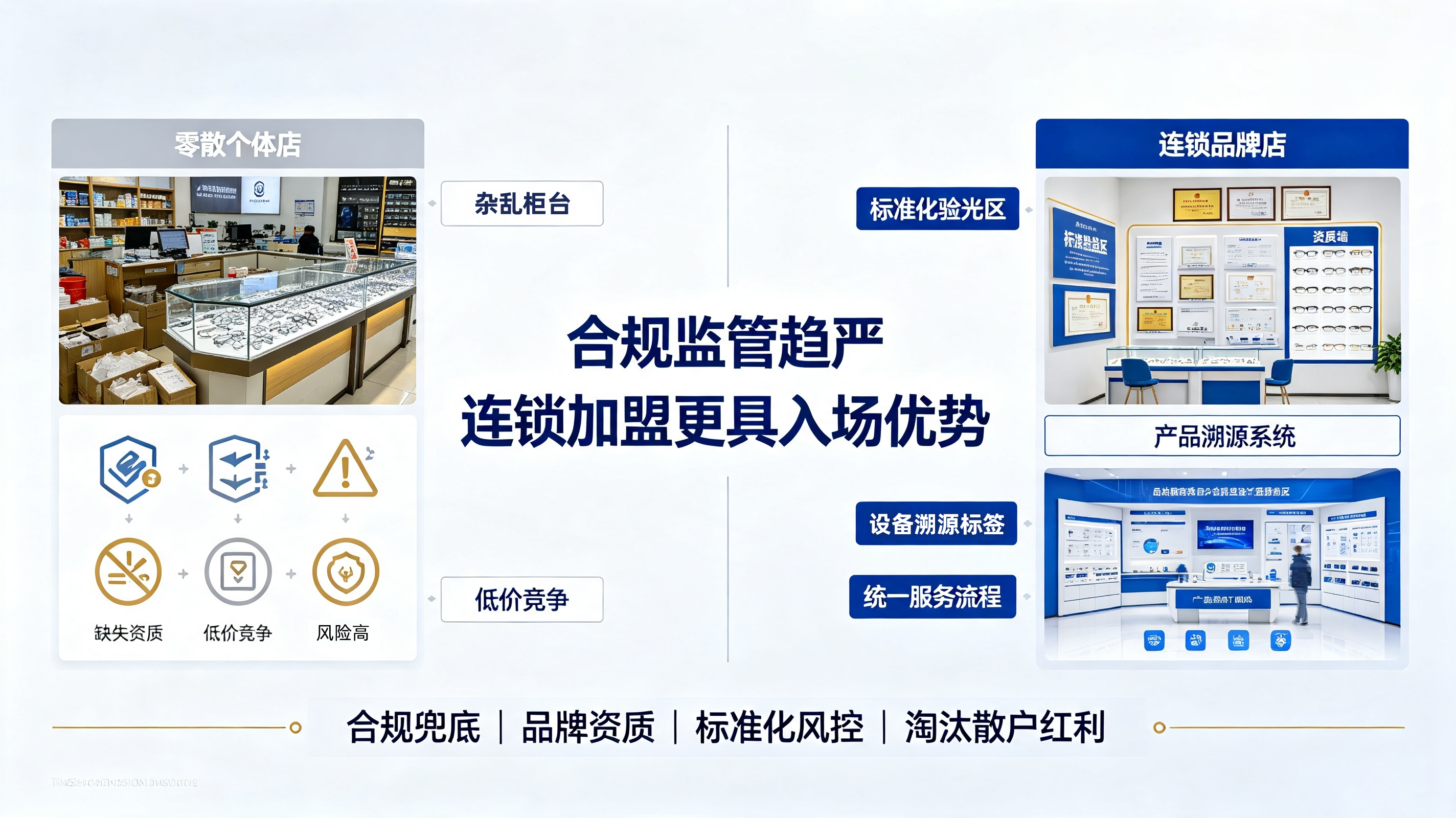
Industry-wide Compliance: Tighter Regulations Amplify the Advantage of Licensed Chains
2026 New national standards and full-chain metrology supervision are now in effect. Optical equipment mandatory calibration, personnel qualifications, product branding, and marketing language are all under tighter control. Independent retailers and unlicensed scattered stores will gradually exit the market. Chain franchise brands, with complete qualifications, standardized compliance systems, and supply chain controls, are better positioned to meet industry regulatory requirements. Outsider entrepreneurs choosing a chain model can mitigate some compliance risks. Core takeaways: Compliance assurance, brand qualifications, standardized risk control, and capitalizing on industry normalization benefits.
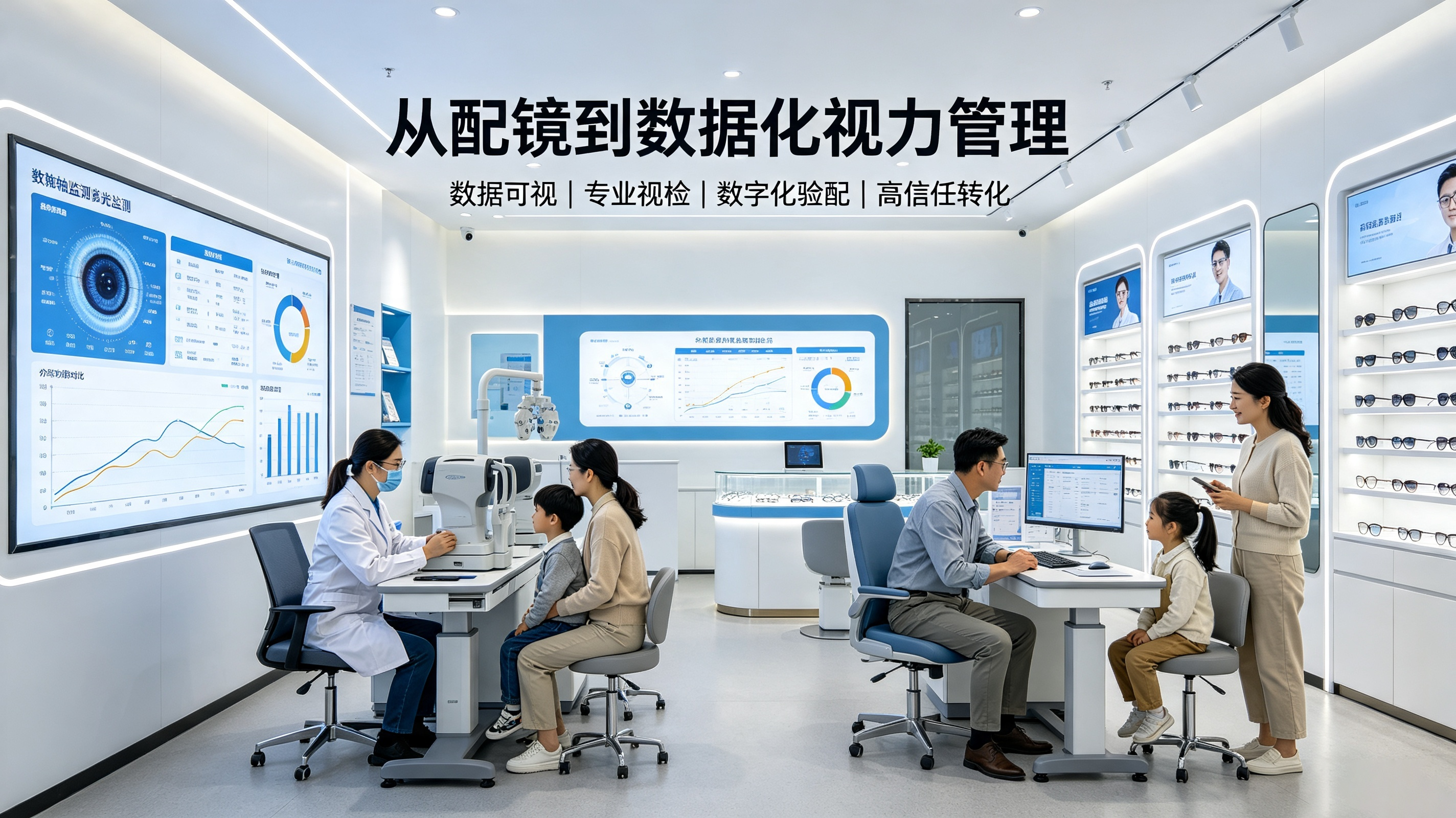
Professional Data-Driven Optometry | Precision Vision Testing Powered by Data
Consumers no longer focus solely on prescription strength. Monitoring axial length, visual function data, and tracking vision progress over time have become essential decision factors for parents and professionals. Digital optometry and visualized vision data transform vague eyewear selection into precise data-driven management. Professional equipment combined with data services is now the core competitive advantage of optical stores: the higher the expertise, the stronger the customer trust. Key takeaways: Data visualization, professional vision assessment, digital prescription fitting, high-conversion trust building.
Three Core Opportunities
Driven by policy support, expansion into lower-tier markets, and rising consumer demand to fuel vision care entrepreneurship.
Policy incentives support
- Myopia prevention and control has been elevated to a national priority. Supporting policies are driving the implementation of adolescent myopia management programs. The Ministry of Education requires primary and secondary schools to conduct 2 vision screenings per semester, while continuous policy updates are unlocking demand in the eye health services market.
- The continuous implementation of the new national standards is raising industry entry barriers, mandating equipment calibration and certification for personnel, and driving unqualified small retailers out of the market. Vision care services are now classified as part of essential health services, evolving from a simple eyewear retail model into a民生-focused industry.
- The franchise registration system is steadily improving, and the chain franchising model is becoming more standardized. Established optical retail brands are now seizing new growth opportunities.
Huge potential in the lower-tier markets
- There is significant untapped potential in lower-tier markets, as stores in first- and second-tier cities are nearing saturation. However, county-level towns and rural communities lack standardized, professional optometry centers. Growing parental awareness of eye health provides a strong foundation for expansion in these areas.
- Transitioning from selling lenses and frames to providing comprehensive optometric care throughout the vision lifecycle. The traditional low-price competition based on eyewear pricing is losing effectiveness. Future core revenue streams for stores will come from establishing vision records, regular monitoring and follow-ups, vision therapy, and personalized eye health plans. Service premiums exceed those of product-only sales, helping stores escape price wars and build a differentiated competitive advantage.
- Consumer mindsets are evolving: rural residents increasingly recognize the value of professional eye care services and no longer settle for basic eyewear, leaving significant market demand to be unlocked.
- Ongoing urbanization and the rise of new communities are creating more opportunities to locate specialized eyewear stores in neighborhood areas.
- There is still room to expand headchain layouts into the lower-tier market. Early entry helps build local user awareness.
Comprehensive upgrade in consumer demand
- Shift in purchasing behavior: Customers no longer just buy frames and lenses; they prioritize comprehensive vision monitoring and optometric management services.
- A chain eyewear brand with a complete training system and standardized service processes, offering comprehensive product and operational solutions. Compared to small-scale stores, chain brands deliver significantly greater overall advantages.
- Demand across all age groups continues to grow, driving diversified growth in optical retail with increasing needs for adolescent myopia management, adult prescription eyewear, presbyopia solutions for seniors, and sunglasses.
Traditional Brick-and-Mortar Stores vs. The Charleston Model
Compare 9 Core Dimensions to Identify Gaps and Choose the Right Track
1Brand Advantages
Limited local reputation only; lacks national brand backing, resulting in limited customer trust.
Over 1,000 chain stores with national TV advertising and endorsement by renowned artist Ju Hao, featuring unified storefronts and backdrops to quickly build consumer trust.
2Product Supply Chain
Wholesale markets: heavy product homogeneity forces price wars; premium brands impose high entry barriers, deposits, and restrictions, limiting flexibility.
Offers 23 major product lines with thousands of styles added continuously; exclusive private-label products for differentiation; partnered with top-tier global brands—no deposit and no minimum order quantity required. Free exchanges supported, lower sourcing costs, and orders as low as 1 pairs.
3Marketing & Customer Acquisition
Waiting for customers in-store, lacking promotional plans and marketing materials, and relying on a single customer acquisition channel.
Headquarters delivers a full suite of marketing materials and campaign plans monthly, offering proven models for diverse customer acquisition in campuses and communities. We proactively drive leads through major search platforms, information stream media like Douyin, employee-managed accounts, and online promotion by existing franchisees.
4Technical Operations Training
Reliance on individual experience, slow technology adoption, master-apprentice training without standardization, lack of expert guidance for complex challenges, trial-and-error learning, difficulty verifying information accuracy, and excessive time and effort consumption.
Charleston Business School offers fixed classes every Wednesday and Thursday, integrating internal trainers, instructors, and brand representatives to deliver training on fitting technology and customer acquisition. Headquarters also provides on-site support services, opportunities for advanced training at the HQ, and offline training events in various cities with manufacturers, while synchronously sharing training resources from major lens brands.
5Ongoing support for store launch
Launching a store alone requires you to handle site selection, renovation, equipment and inventory sourcing, training for fitting techniques, licensing, and opening operations. New stores face a difficult cold start, and long-term operations are often fought as a solo endeavor.
Expert on-site support to drive launch momentum; comprehensive technical and operational training plus one-on-one after-sales service before, during, and after store opening. Our headquarters provides 10 key support initiatives throughout the entire lifecycle, offering a standardized, scalable model.
6Long-term competitive moat
Business tied to a single owner limits scalability; rising industry standards and consumer demand for expertise are intensifying competition for small shops.
A complete standardized operating model that eliminates reliance on the founder, delivers comprehensive coverage across all age groups, capitalizes on industry policies and underserved markets, and strengthens competitive resilience.
7Regional Market Protection
No market protection; new competing stores nearby can trigger a race to the bottom on pricing and divert customers.
Enforce standardized regional protection policies by defining protected zones based on city population and commercial districts. This prevents internal brand competition and ensures franchisees have adequate operating space.
8Device and License Support
Buying equipment on your own often leads to pitfalls, such as unreliable after-sales support. You may also lack familiarity with the licensing and certification processes for optometry and lens fitting, resulting in significant time consumption. Additionally, due to limited industry knowledge, you may not secure competitive procurement costs.
Full set of professional optometry and processing equipment shipped directly from the factory, covered by China's "Three Guarantees" policy. Headquarters provides step-by-step licensing guidance to help you complete store qualification setup and reduce startup barriers.
9Customer After-Sales Dispute Resolution
Stores independently handle all customer complaints and after-sales disputes. Without experience or standardized procedures, this risks damaging store reputation and creating operational liabilities that outweigh the benefits.
Headquarters provides a dedicated after-sales support channel, delivers standardized resolution workflows, and collaborates with stores to handle complex customer complaints—reducing operational pressure on store teams.
Starting a business involves market risk. Success is not guaranteed and depends on location, your management skills, and local market conditions.
Seize industry opportunities
Start your journey
Top 10 Charleston HQ Support Programs: Help Anyone Open a Professional Eyewear Store